
01 / Understanding
A small world. A change in perspective.
What happens when we change the scale of matter?
A nanometre is one billionth of a metre: 10⁻⁹ m. Nanotechnology usually studies and controls matter between 1 and 100 nm, where surfaces and quantum effects can modify its behaviour. Not all materials change in the same way.
Dividing a cube into smaller pieces increases the total exposed surface area without changing the volume of material. For ideal cubes, the surface-area-to-volume ratio is 6/L. This geometry helps explain catalysis, but cannot on its own predict toxicity or efficiency.
Electron microscopes and scanning probe microscopes study small structures through different mechanisms. A scientific image needs a scale, measurement conditions and context; it is not a conventional photograph.

A world on our scale
Leaves and branches: the world we can touch.
Conceptual illustrations, not micrographs. The size indicates the width of the field shown; each scene is a scale reference rather than a continuous microscopic zoom.
GEOMETRY CHANGES THE RULES
The same material.
Much more surface area.
Imagine dividing a cube with a side length of 1 m into smaller cubes and separating them. We keep the same volume and mass while exposing more surface area.
Subdivision diagram: the fragments shown are symbolic; the selector values are calculated exactly within the model.
S/V = 6/L · S/m = 6/(ρL)
Ideal non-porous cubes: L in metres and ρ in g/m³ (1 g/cm³ = 10⁶ g/m³). All faces are accessible. Aggregation can reduce the accessible surface area. At 1 nm, the continuum model is a geometric extrapolation: it does not describe the actual atomic structure.
WHEN SIZE MATTERS
It is not just about
making it small.
Six materials. Six ways to discover how structure, surfaces and size transform the behaviour of matter.
 AuGold01
OPTICS · PLASMONICS
Gold that changes colour
From metallic gold to red or purple dispersions: size, shape and surroundings change the optical response.
Explore the material ↗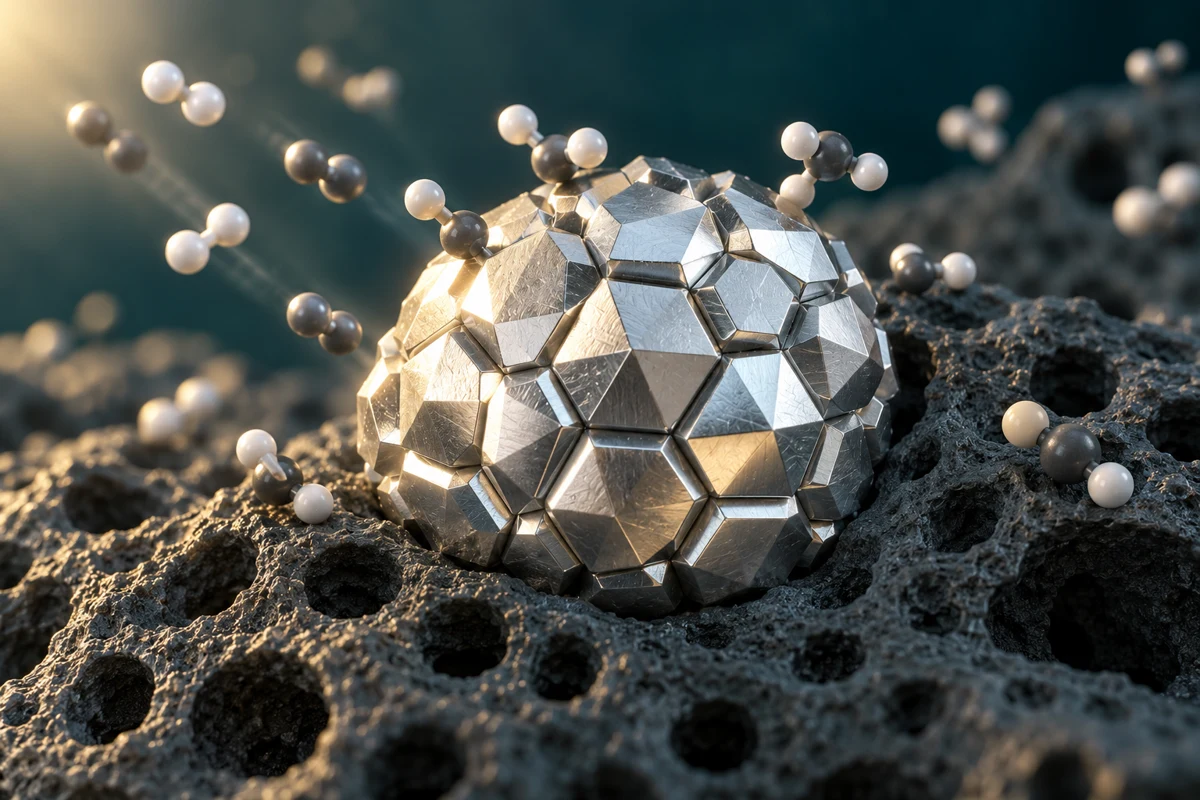 PtPlatinum02
SURFACE · CATALYSIS
More surface area for reactions
Dispersing platinum as nanoparticles can expose more active sites per unit mass. But shape matters too.
Explore the material ↗ QDQuantum dots03
CONFINEMENT · EMISSION
Size gives light its colour
In these semiconductor nanocrystals, size can change the colour of the emitted light.
Explore the material ↗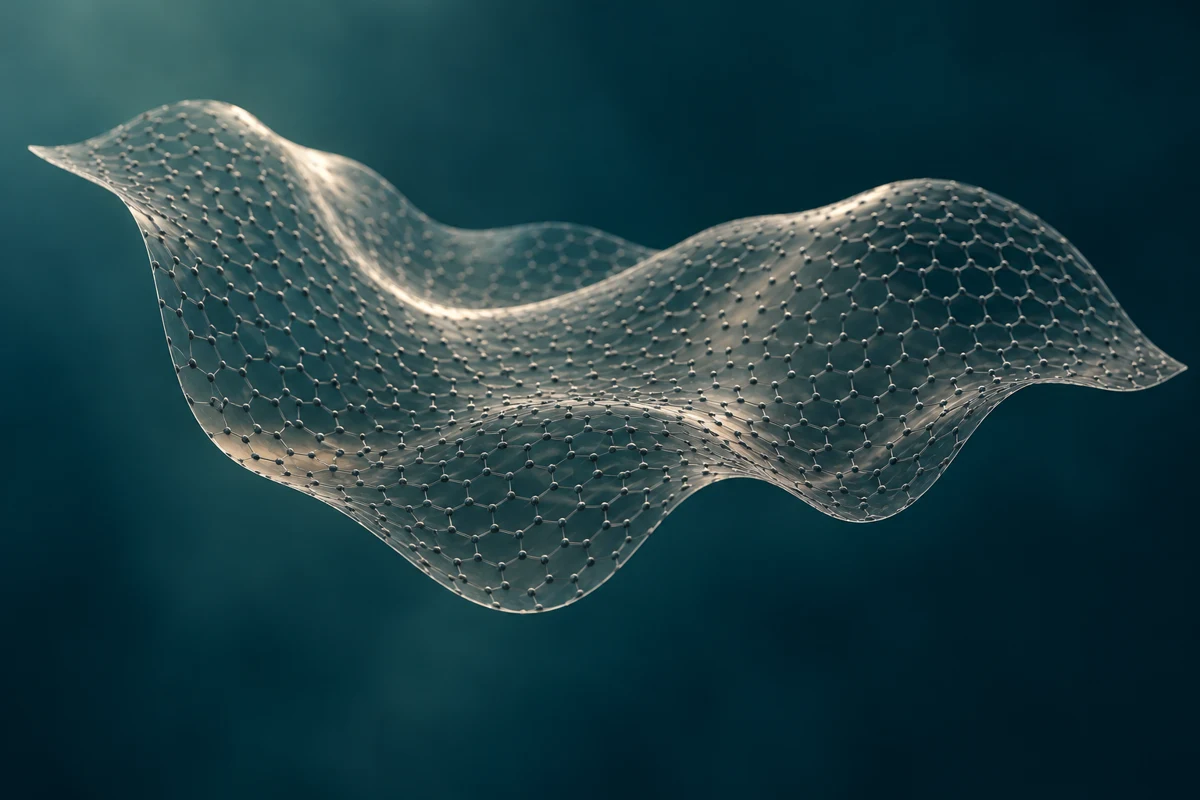 CGraphene04
2D MATERIAL · CONDUCTION
A one-atom-thick sheet
A carbon lattice one atom thick: its two-dimensional structure produces distinctive electronic behaviour.
Explore the material ↗ Fe₃O₄Iron oxide05
MAGNETISM · SEPARATION
Particles that respond to a field
Magnetite nanoparticles can respond to magnetic fields and support separation strategies.
Explore the material ↗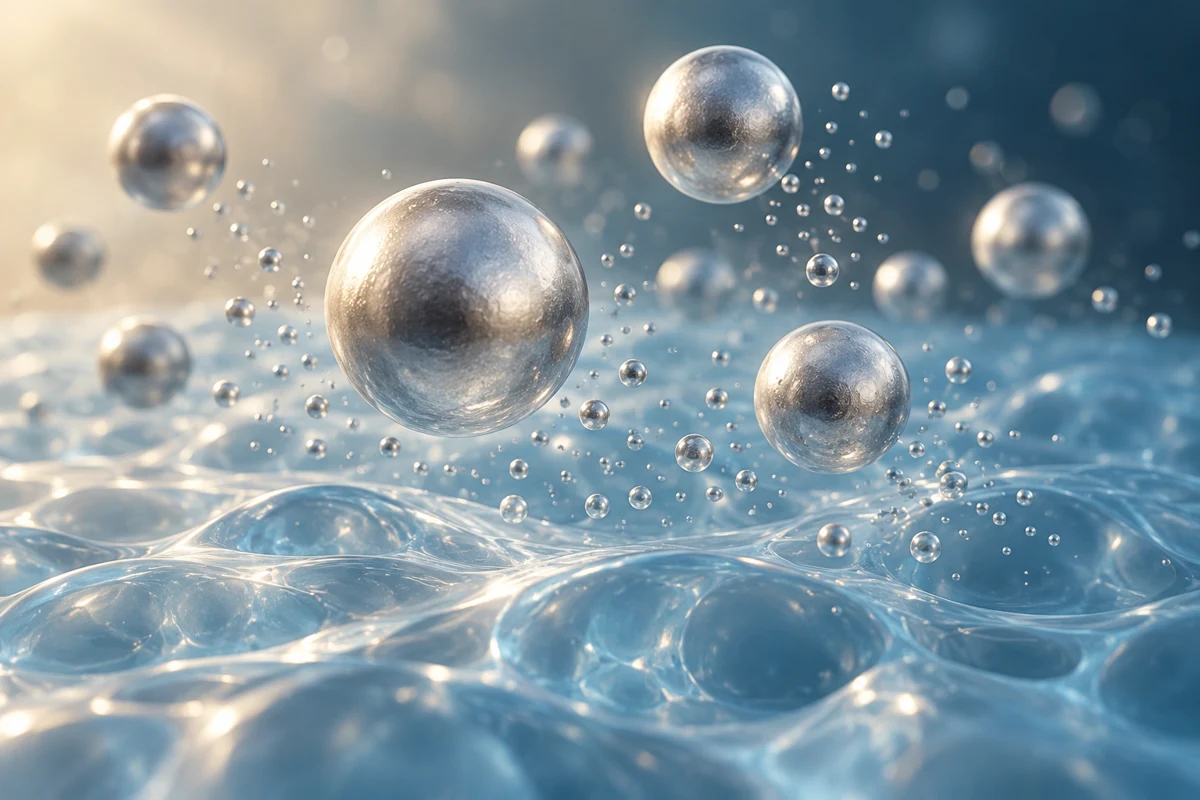 AgSilver06
SURFACE · IONS
Surfaces can release ions too
The antibacterial activity of nanosilver is closely linked to Ag⁺ ion release and the conditions of the surrounding medium.
Explore the material ↗Conceptual images. Properties depend on composition, shape, size and surroundings; there is no universal change at 100 nm.